Residual Stock Finance in Australia: How Developers Refinance Unsold Dwellings After Practical Completion
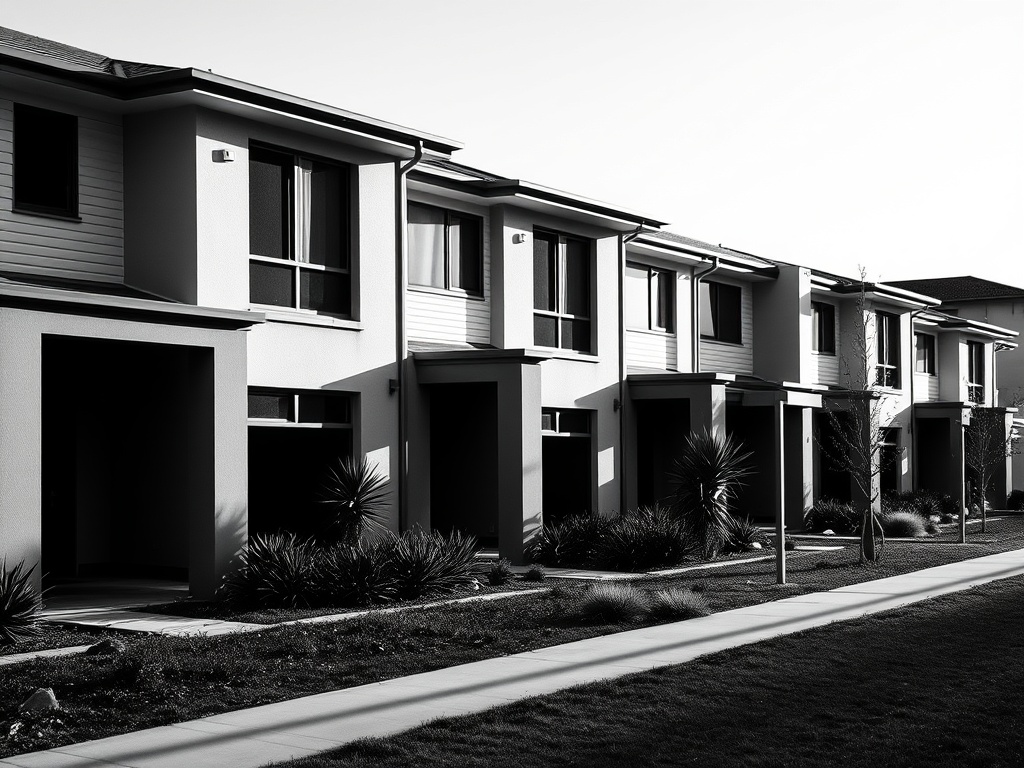
You are at or near practical completion. The construction facility is running off. Dwellings remain unsold. Residual stock finance is the refinance of that completed, unsold stock — a term facility against what is already built — so the construction loan can be repaid without discounting the remaining lots into a soft market.
It is not a construction facility. Build risk and remaining cost to complete have left the file. Credit is now underwriting completed dwellings, a sell-down, and whether the outgoing lender can be taken out before expiry.
What residual stock finance is (and is not)
A residual stock facility is a first-mortgage term loan secured on completed unsold dwellings after practical completion. Its job is to repay or replace the construction loan when sales have not cleared the debt. Principal comes back as lots settle, or on a refinance if you elect to hold.
It is not a construction loan. Construction credit is sized to remaining cost to complete, QS drawdowns and delivery risk. Once the certifier has signed off, that product has done its work. Asking the same lender to sit on completed stock they never agreed to hold is a different credit box, and most construction facilities are written to expire when the build does.
It is also not a hold-to-rent investment loan. Discounting to meet a payout date is a sales decision that destroys margin. Residual stock finance is a credit decision that buys time to sell, or hold, at the price the asset can support.
Siare names residual stock as a product it places — alongside construction, bridging and second mortgages — and advises on residual stock facilities as part of the development stack. The question is whether your file is a residual-stock file yet, and whether the pack will survive contact with credit.
When you need it: PC, OC/titles, construction expiry, sales tail
The trigger is a timing gap. Construction debt is built for the build; residual stock finance is built for the sales tail.
Practical completion is the first gate. Until works are complete enough to occupy, you still have construction risk. A residual lender will not take a file with material cost to complete — that remains a construction or completion facility.
Occupation certificate and titles are the second. Credit needs dwellings that are lawful to occupy and lots that can be sold and discharged. For strata, that usually means a registered or clearly registrable plan. For Torrens lots, titles a purchaser's lender can take. If OC or registration is still in train, say so. Do not present a completion bridge as residual stock.
Construction expiry is the third, and the one that forces the decision. The outgoing facility has a date. Line fees, default rates and guarantees all get more expensive after it. The construction lender is not being difficult: their product ended when remaining cost to complete hit zero.
The sales tail is why the date matters. Presales settle. The rest do not, or not on the original absorption. You can extend, discount, or refinance the unsold dwellings on residual stock terms. Start that conversation before PC, not in the last fortnight of the term.
How lenders size it: as-is vs in-one-line vs GRV, LVR, GST net
Do not send the original feasibility GRV and call it the security. Credit will not.
Gross realisation value is the sum of individual selling prices — a development-feasibility number. As-is completed value is what a valuer will support on the dwellings as they stand today, after PC. In-one-line (bulk) value is what a single buyer would pay for the leftover stock in one line, usually a weaker number than a lot-by-lot retail sum. Residual stock is sized to completed as-is value and the residual sales, not to the GRV that got the construction loan away.
LVR is file-specific. Siare does not publish a residual-stock LVR cap. Senior development debt is described on the borrower side at up to 80% LVR on an as-is basis; that is a senior product statement, not a residual-stock promise. On a live eight-figure residual stock placement, the facility sat at roughly 70% of a Savills as-is appraisal. Treat that as what that file supported, not as a band to underwrite to. Location, concentration of unsold stock, exchanged versus vacant lots, and security quality all move the number.
GST is not a footnote. Credit reads contracts GST-net. A GRV that still has GST in it inflates the security and the LVR looks better than the cash that will land at settlement. Siare's development-finance work tests GST treatment, including margin-scheme positions, because that is one of the points on which lenders decline or reprice. Put it in the pack the way a credit officer will reconstruct it: taxable versus margin scheme, net proceeds on exchanged contracts, and what remains on unsold stock.
Pricing and term (asset quality, sell-down plan, sponsor)
Once build risk is gone, the lender is taking completed-asset risk plus sell-down risk. That should price inside construction risk and outside a bank investment loan. How far inside depends on the file: asset quality and location, the remaining sell-down, and the sponsor.
Completed dwellings in a market with purchaser depth are a different credit to leftover stock in a thin pocket, or a concentration of unsold lots in one building. Unconditional exchanged lots are not vacant stock on the market. Credit wants a schedule it can test — settled, exchanged, listed, at what price, with which agent, over what absorption. A plan that assumes every remaining lot settles inside the original feasibility month is not a plan. A delayed case is.
Siare does not publish residual-stock rates or tenors as product. Typical market practice — indicative, not a quote — is a short-to-medium term, interest-only facility sized to the sell-down, often with interest capitalised. The live lesson from Siare's book is more useful: the rate you are first offered is rarely the rate the lender will settle at, if someone makes the case on security, conduct and relationship. On the Mosman file, that argument moved the coupon from an opening 9.00% through 8.24% to 7.99%. Term should outlast a realistic marketing period. A facility that expires before the stock can clear just recreates the construction-expiry problem on a new letterhead.
Partial discharges as lots settle
This is the operational heart of a residual stock loan. The facility is not meant to sit until the last dwelling sells and then repay in one cheque. As each lot settles, a release amount is paid to the lender, that title comes off the mortgage, and the debt reduces.
Credit will want the release mechanics on paper before term sheets are marked up: which lots are allocated which debt; what happens if the better lots sell first; whether interest is recouped on each discharge; whether surplus proceeds come back to you or stay in the facility as a buffer against the slower stock; whether a minimum balance or a minimum interest period applies.
Get this wrong and you settle a lot and still cannot deliver clean title, or you deliver title and keep none of the cash. Your unsold schedule and your sales schedule have to reconcile to the same lots, contracts, GST-net proceeds and release amounts. If they do not, the file is not ready for credit. It is ready for a query that burns a week.
vs construction-loan extension vs discounting stock
At PC you have three ways out of the construction loan. Only one of them is a residual stock facility.
Extending the construction loan keeps you in a product designed for build risk. It can be the right call when remaining stock is small, sales are settling, and the existing lender will extend without repricing you back into construction risk. It is the wrong call when the lender is refusing, repricing, or still running QS and cost-to-complete conditions over a completed asset. An extension delays expiry. It does not change the credit box.
Discounting stock clears the debt by giving away margin. If the unsold parcel is small and a modest price cut actually empties it inside the construction tail, the arithmetic can favour a sale. If the parcel is large, the discount required to clear it is usually a bigger number than the carry on a residual stock loan — and once you have cut, the next buyer waits for the next cut.
Residual stock finance refinances the completed unsold dwellings so you can repay the construction lender and sell, or hold, without that fire sale. It costs an establishment, a valuation, legal and a coupon. It is worth it when the alternative is destroying the profit the project was built to make. Run the three numbers on the same residual cashflow: extension cost on the full construction balance; residual-stock cost on the unsold parcel only; discount cost against the same GRV. Then pick the one that leaves the most equity standing.
Documents that get a file through credit in two weeks
Credit does not slow a complete file. Incomplete files sit. The pack below is what a credit officer can actually work with — not a promise that every residual stock loan credits in a fortnight. Valuation, the outgoing discharge and legal still sit on the critical path; Siare's published development-finance close is typically four to ten weeks from mandate. Completeness is what lets indicative terms come back in days.
- Independent as-is completed valuation. GRV or lot-by-lot retail as a supporting schedule only. Do not substitute the original development feasibility.
- Sales schedule and unsold schedule, reconciled: settled, exchanged, listed and off-market, with prices, deposits, dates, agent and any rescissions.
- Practical completion certificate, occupation certificate, and title or strata registration status. Defects and insurance in writing.
- Residual cashflow: holding costs, GST-net proceeds on remaining lots, a base sell-down and a slower case.
- Existing facility: drawn balance, payout figure, expiry, securities, guarantees, and any extension offer already on the table.
- SPV financials, trust deed and structure chart. Credit will trace the same project entity the construction lender is exiting.
- Sponsor assets, liabilities and development experience. Conduct on other facilities matters; on the Mosman file it was part of the pricing argument.
- QS close-out if any remaining cost, retention or disputed variation remains. If cost to complete is not nil, this is not yet a residual-stock file.
- GST position: margin scheme or taxable, per lot, with net proceeds. Leave it out and the indicative offer gets repriced.
That is a credit file, not a teaser.
Worked example: eight-figure residual stock
The public file is $12.6 million of residual stock against a Mosman trophy asset.
The security was a completed trophy residential asset at 3 Methuen Avenue, Mosman, New South Wales, appraised by Savills at $18,000,000. The requirement was an eight-figure residual stock facility so the client could hold completed stock rather than discount it into a soft market. The facility placed was $12,600,000 with La Trobe Financial — an LVR of roughly 70% of that appraisal.
Eight-figure residual stock sits outside what most brokers place, and outside what most non-bank lenders will write without a relationship. At that size, the gap between an opening coupon and a negotiated one is measured in hundreds of thousands of dollars over the life of the facility. The file was not accepted at the first number. It was argued directly with the lender's credit and client-partnerships teams, moving through 9.00% and 8.24% before settling at 7.99% — more than a full percentage point below where the conversation started. The case for that rate was the quality of the security, the borrower's conduct across other facilities, and the relationship weight of Preferred Platinum accreditation. It is a representative example, not a pricing promise.
The lesson on the page is the one that matters: hold completed stock instead of discounting it, size leverage to a current as-is appraisal, and treat pricing as a negotiation if someone will sit with credit.
How Siare places these
Siare is an arranger and adviser on unregulated, business- and investment-purpose credit, including residual stock facilities. The people packing the file have assessed credit inside NAB, ANZ and CBA, managed property funds, and developed their own sites. The submission is written to answer the questions a credit team is required to ask, before they ask them.
Send the feasibility, site details and any existing term sheets. A structuring view comes back within 48 hours — structure, likely leverage, and which lenders will genuinely compete. From there the work is lender competition, term-sheet negotiation, valuation and QS coordination through to financial close. Typical close is four to ten weeks, driven by those workstreams.
The panel is a deliberate mix of bank, non-bank and private credit, not a wall of logos. Track record states 17 funders actively used, a median facility of $2.5 million, and $21.1 million as the largest facility placed, from the twelve months to July 2026. Residual stock sits in that book; Mosman is the public proof at the top end. Accreditation as a La Trobe Financial Preferred Platinum Partner is why complex scenarios get priority processing and direct access to senior credit staff — the channel that argued Mosman off 9.00%.
Capacity is disclosed before you engage. Siare acts as arranger. Advisory fees are agreed at engagement — typically a work fee plus a success fee on financial close, with any lender-paid fees disclosed in writing. Indicative leverage, pricing and timeframes remain subject to lender credit approval, independent valuation, QS review, due diligence and legal documentation. A structuring view is not an offer of finance.
If you already have a broker or adviser on the file, residual stock can be referred in on a published schedule — partner terms sit in the open, including the Platinum channel used on complex placements. If you are the sponsor, put the pack together and submit the project, or contact Siare and send the feasibility. If you want the stack designed before it goes to market — GST, GRV support, settlement funding and residual stock as one conversation rather than a scramble at PC — that is the development finance advisory mandate.
Past transactions are not a guarantee of future outcomes. Every residual stock loan is subject to the relevant lender's credit assessment. The next step is a file that can be placed.