Why your progress claim got held up: QS certification, PPR forms and insurance
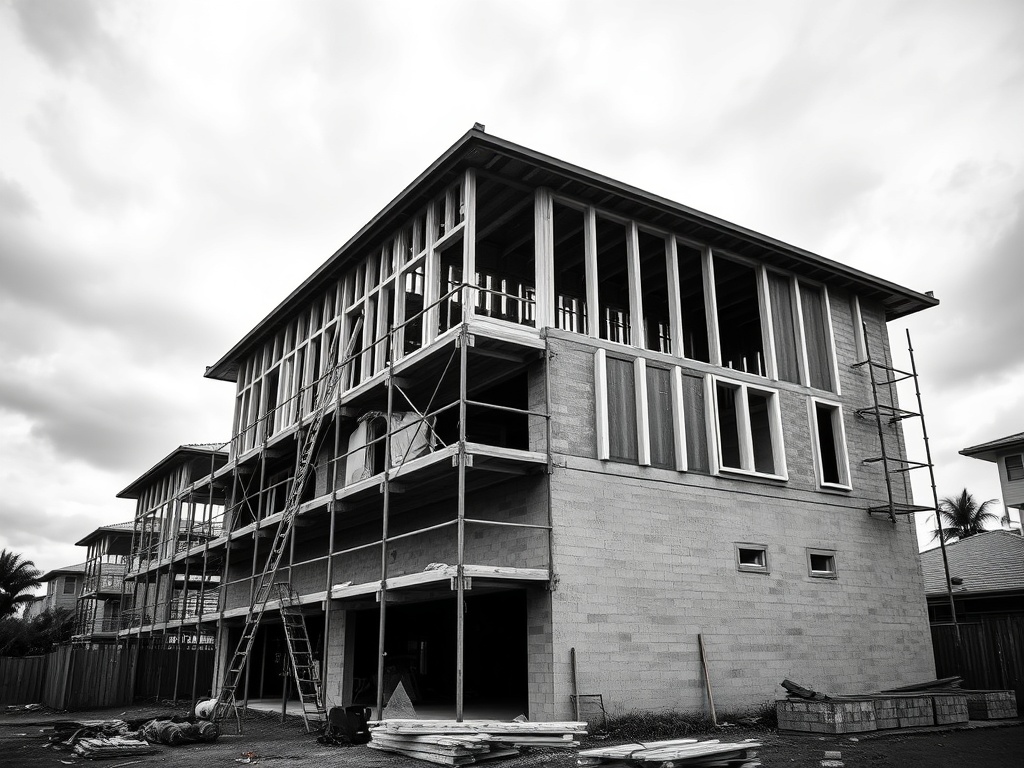
Once a progress claim is certified, funds typically clear in 24 to 48 hours. Almost every delay a developer experiences happens upstream of that, in a process with more failure points than most people realise.
The principle that causes the most disputes
A quantity surveyor certifies against verified physical completion on site — not against what has already been paid to the builder.
On one facility with a varied contract of about $1.498m, the QS would not fully certify a claim because windows and rough-in had not reached the claimed stage. The borrower had already paid the builder, and had an agreed 9% final cost variation. Neither fact was relevant to certification.
If you fund the builder ahead of the works, you are carrying that money at your own risk until the works physically catch up.
The six things that stall a claim
1. No builder’s payment statutory declaration
It is the trigger for the inspection. The QS will not inspect without it. Have it ready the moment the claim is raised, not after the QS asks.
2. The wrong progress payment request form, or an incomplete one
Use the current digital-signature version only — older or paper versions are rejected outright. It must be signed, with either a wet signature or a digital signature accompanied by a certificate of completion showing signatory and timestamp history, and it must be accompanied by the builder’s invoice. Missing any element bounces the claim and delays the site-inspection booking.
3. A mismatch between the PPR and the builder’s invoice
This is the most common cause of certification delay. On one file a progress claim requested $150,920.80 ex GST but the PPR form showed only $117,042.72. Correcting the form to match, plus obtaining the builder’s statutory declaration, allowed certification — and funds released within 24–48 hours.
Reconcile the PPR against the builder’s actual invoice before the inspection is booked.
4. Lapsed or undervalued contract works insurance
Contract works insurance on file must cover at least the full ex-GST contract value and must not have lapsed. An outdated or undervalued certificate blocks a claim even after the QS has approved the release — which is a particularly frustrating way to lose a week.
Note this is contract works insurance, not domestic building insurance. They are different products and DBI does not satisfy this requirement.
5. Claiming for trades that have not visibly started
Expect the QS to zero out any line item showing no physical change since the last inspection. A site-works claim of $24,578.50 covering driveways, landscaping and decking — none of which had started — was reduced to $0.00.
Claiming optimistically does not accelerate anything. It creates a dispute and a delayed report.
6. Assuming the certified amount equals the claimed amount
It very often does not. One claim requested $165,000 and was certified and paid at $150,000. Treat the requested figure as provisional and confirm the QS’s supported figure before committing to trade payments against it.
Two structural traps
Variations exceeding remaining contingency
A builder’s variation that exceeds the remaining contingency requires separate, delayed credit approval to draw from the main construction budget. The lender will pay the QS-certified base claim immediately, but the variation shortfall — roughly $20,000 on one $141,437.93 base claim — needs its own approval step.
Related: many construction facilities retain a non-negotiable minimum cost-to-complete within contingency at all times, commonly around 3%. A short-payment dispute has to show contingency comfortably above that floor after the disputed amount is released — not merely that the original budget had headroom.
The weekly release cutoff
Fund release is tied to when the QS report reaches the lender. A report landing on a Friday can mean no release until the following Tuesday. Chase the QS firm early in the week, not late, or you lose a business week to a scheduling artefact.
Run every claim as two separate actions
- Lodge with the lender — PPR form, builder’s invoice, statutory declaration.
- Chase the QS directly — confirm the report has cleared the firm’s internal QA, and confirm the actual certified dollar figure.
Chasing only the lender is how a shortfall gets discovered on the day funds were needed. Where under-certification looks likely, get the builder’s trade cost breakdown to the QS early and ask what partial amount they are prepared to certify, so the gap can be funded before the claim falls due.
Things worth knowing
- Self-funded works can offset a settlement contribution. Where a borrower has self-funded works ahead of a settlement, check whether the equity contribution due can be offset against already-completed, verifiable progress claims rather than requiring fresh cash. On one file, $225,000 of available claims covered a ~$38,000 settlement contribution.
- Direct payments to the builder are reimbursable. If you paid the builder ahead of the formal claim to keep the build moving, most lenders will reimburse via a signed PPR nominating your own bank details, plus the builder’s receipt or updated invoice as proof.
- Owner-builder variations need quotes and invoices, not a note on the builder’s invoice.
- Changing the building-contract entity triggers a review. Even a purely administrative sole-trader-to-company transfer by the same individual triggers a change-of-builder review and can require a fresh valuation. Loop the QS in as soon as it happens, not after a claim is queried.
- Jurisdictional naming differs. In New South Wales the document equivalent to a Victorian building permit is the construction certificate. Flag that with an interstate construction team up front to avoid a drawdown hold.
- Final claims need their own pack: QS confirmation of 100% completion with nil cost to complete; receipts or invoices; a builder’s no-monies-owed letter; updated replacement building or strata insurance with the lender noted as interested party; and the occupancy certificate. Watch QS office closures over Christmas — inspections need submitting well ahead of the closure date.
The scheduling discipline
Book the QS inspection as soon as works are ready. Chase the lender’s progress-claim team the moment the QS report issues rather than waiting for the next release cycle. And never schedule a critical trade payment — especially one gating an inspection or sign-off — purely against an expected drawdown date that is outside your control. On one project a demolition invoice pegged to an expected drawdown went unpaid when the drawdown slipped; the contractor invoked a late-payment fee and withheld the final building surveyor sign-off until payment cleared, stalling completion.
General information only. It is not credit assistance, financial product advice, or an offer of finance, and it does not take account of your objectives, financial situation or needs. Processes and figures described are indicative observations over 2024–2026 and vary by lender.